Hatchetfish Eggs vs Snail Eggs vs Shrimp Eggs: How to Tell the Difference
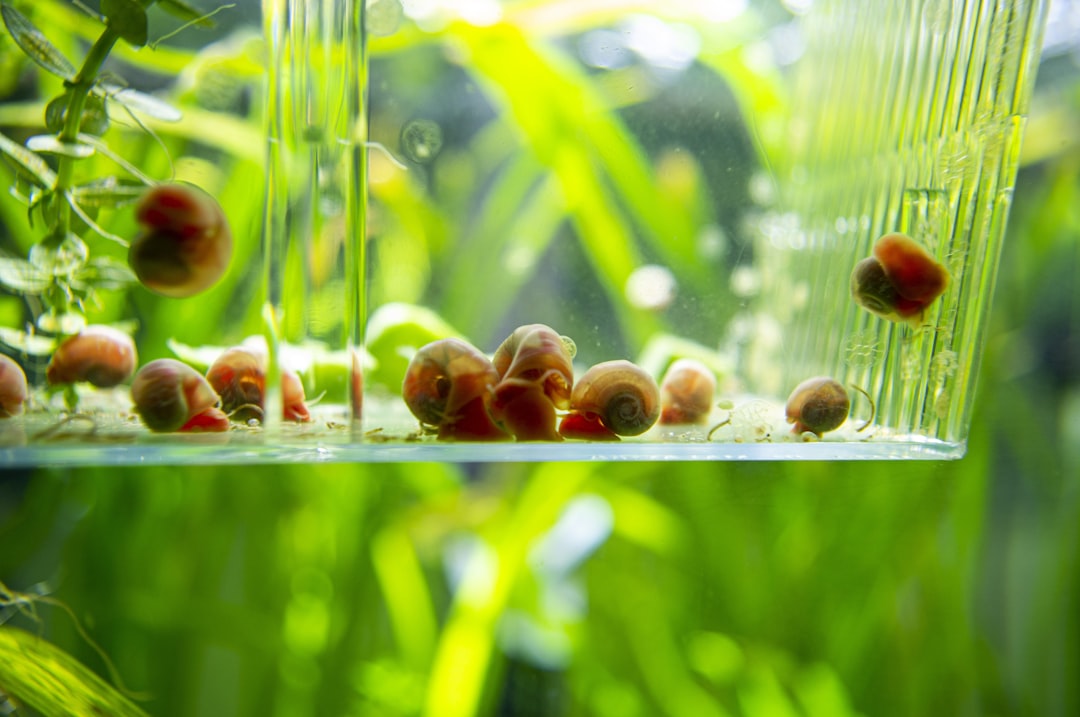
You found mystery eggs in your aquarium. Now you need to know which species laid them.
Identify aquarium eggs by location and appearance: mystery snail eggs are pink calcified masses above the waterline; ramshorn snail eggs are clear jelly blobs on glass and leaves; shrimp eggs are carried under the female’s abdomen; hatchetfish and tetra eggs are tiny (0.5-1 mm), translucent, and scatter on substrate or plants.

Why Location Is Your First Clue
Egg identification relies on three key clues: location, size/appearance, and tank inhabitants. Start with location because it immediately rules out many possibilities.

Location-Based Identification
| Location Found | Most Likely Species |
|---|---|
| Above waterline (glass, lid, hood) | Mystery snail, apple snail |
| Underwater on glass or plant leaves (jelly blob) | Ramshorn snail, bladder snail |
| Attached to female shrimp abdomen | Amano, cherry, or ghost shrimp |
| Scattered on substrate or among plants | Egg-scattering fish (tetras, hatchetfish, danios) |

Comparison Table: Eggs by Species
| Egg Type | Size | Appearance | Location | Key Characteristics |
|---|---|---|---|---|
| Mystery Snail | 2-3 mm per egg | Pink or cream calcified mass | Above waterline on glass/lid | Hard, crusty clutch; dozens of eggs |
| Ramshorn Snail | 1-2 mm blob | Clear jelly with visible embryos | On glass, plant leaves underwater | Gelatinous mass; embryos visible as dots |
| Bladder Snail | ~1 mm blob | Clear jelly, smaller than ramshorn | On surfaces underwater | Smaller, often on substrate |
| Amano Shrimp | ~0.5 mm | Greenish-brown, spherical | Under female’s tail | Female carries 1000-3000 eggs |
| Cherry Shrimp | ~0.5 mm | Yellow to dark green | Under female’s tail | Female carries 20-50 eggs |
| Hatchetfish | ~1 mm | Translucent, clear | Scattered on bottom/plants | Non-adhesive, sinks |
| Tetra | 0.5-1 mm | Clear or white | Scattered on plants/substrate | Non-adhesive, no parental care |
| Danio | ~1 mm | Clear, slightly yellow | Scattered on substrate | Non-adhesive, sinks |
Fish Eggs Explained: The Egg Scatterers
Most small tropical fish kept in community tanks are egg scatterers. This includes hatchetfish, tetras, danios, barbs, and rasboras.
What Egg Scatterers Do
These fish release eggs and sperm simultaneously during a spawning rush. Eggs scatter freely and sink to the bottom or land on plants. There is no parental care. Parents often eat their own eggs immediately.
How to Recognize Scattered Fish Eggs
- Tiny: 0.5 to 1 mm diameter (like a grain of sand)
- Translucent: Clear, slightly white, or pale yellow
- Non-adhesive: Do not stick to surfaces; lie loosely
- Scattered: Not clustered; spread across substrate or plants
- No nest: No bubble nest, no cave, no attached mass
Fertilized vs Unfertilized Fish Eggs
Fertilized eggs develop a visible dark spot (oculus or germinal vesicle) within hours. This is the developing embryo. Unfertilized eggs turn white and fuzzy as fungus grows on them.
If you see white, fuzzy eggs, they are unfertilized and will not hatch. Remove them to prevent fungal spread to viable eggs.
Snail Eggs Explained: Above-Water vs Underwater
Snails have two distinct egg-laying strategies depending on species.
Above-Water Egg Layers: Mystery and Apple Snails
Mystery snails (Pomacea bridgesii) and apple snails (Pomacea canaliculata and related species) lay eggs above the waterline.
Appearance: Pink or cream-colored calcified clutch. The mass feels hard and crusty, not soft.
Location: Attached to glass above water, on tank hood, lid, or even aquarium rim.
Clutch size: 50-200 eggs per clutch, depending on species.
Development: Eggs hatch in 2-4 weeks. Hatchlings drop into the water below.
If you see a pink or cream mass above the waterline, it is almost certainly a mystery snail or apple snail clutch.
Underwater Egg Layers: Ramshorn and Bladder Snails
Ramshorn snails and bladder (pond) snails lay eggs underwater in gelatinous blobs.
Appearance: Clear or whitish jelly mass. Embryos visible as tiny dots inside.
Location: On aquarium glass, plant leaves, driftwood, or any underwater surface.
Clutch size: 10-50 eggs per blob.
Development: Hatch in 1-2 weeks. Baby snails emerge fully formed.
If you found a jelly blob underwater, check for visible embryos inside. That confirms snail eggs.
Shrimp Eggs Explained: The Berried Female
Shrimp do not scatter eggs. Females carry eggs attached to their swimmerets under the tail.
What “Berried” Means
A shrimp carrying eggs is called “berried.” The eggs look like tiny spheres clustered under the female’s abdomen. She fans them constantly to provide oxygen and remove waste.
Amano Shrimp Eggs
- Size: ~0.5 mm
- Color: Greenish-brown
- Number: 1000-3000 eggs per female
- Development: Female carries for 4-5 weeks
Amano shrimp eggs require brackish water to hatch into larvae. Larvae need saltwater conditions to develop into juvenile shrimp. This is why Amano shrimp breeding rarely succeeds in freshwater hobby tanks.
Cherry Shrimp (Neocaridina) Eggs
- Size: ~0.5 mm
- Color: Yellow, turning darker as embryos develop
- Number: 20-50 eggs per female
- Development: 3-4 weeks carrying time
Cherry shrimp eggs hatch directly into miniature shrimp in freshwater. No brackish phase required.
How to Identify Shrimp Eggs
If you see eggs attached to a shrimp, they belong to that shrimp species. Loose eggs floating in the tank are NOT shrimp eggs. Shrimp eggs stay attached to the female until hatching.
A Real-World Case Study: The Reddit Mystery
A Reddit user posted photos of eggs falling from dwarf water lettuce. Their tank contained hatchetfish, mystery snails, and Amano shrimp. Commenters debated the source.
Why Identification Was Uncertain
-
Multiple potential egg-layers: Three species could have produced eggs.
-
Visual scale unknown: Photos without reference made eggs appear larger than the reported 1 mm hatchetfish egg size.
-
Location ambiguous: Eggs falling from floating plants could be fallen mystery snail clutch fragments, hatchetfish eggs, or something else entirely.
-
Conflicting information: Some sources say hatchetfish eggs float among plants; confirmed breeding reports say they sink.
Lessons Learned
- Check location first above waterline vs underwater vs attached to shrimp.
- Cross-reference with every species in your tank.
- Accept that some eggs cannot be identified without scale reference.
- Multiple egg-layers create legitimate ambiguity.
Quick Identification Checklist
Follow this sequence when you find mystery eggs:
-
Check location
- Above waterline = snail (mystery/apple)
- Jelly blob underwater = snail (ramshorn/bladder)
- Under shrimp tail = shrimp
- Scattered on bottom/plants = fish (possibly)
-
Check appearance
- Hard pink/cream mass = mystery snail
- Soft jelly blob = ramshorn/bladder snail
- Attached spheres = shrimp
- Tiny loose spheres = egg-scattering fish
-
Check tank inhabitants
- Do you have mystery snails?
- Do you have ramshorn or bladder snails?
- Do you have shrimp? Are females berried?
- Do you have hatchetfish, tetras, or danios?
-
Accept uncertainty
- Without scale reference, visual identification has limits
- Multiple species make identification harder
- Observation over time may reveal hatching behavior
Summary
Identify mystery aquarium eggs by checking location first. Above-water pink masses are mystery snail eggs. Underwater jelly blobs are ramshorn or bladder snail eggs. Eggs under a shrimp’s tail belong to that shrimp. Scattered tiny spheres on the bottom may be egg-scattering fish like hatchetfish or tetras. Cross-reference with your tank’s inhabitants. Accept that some eggs cannot be definitively identified without scale reference or confirmed spawning observation. Use a systematic approach: location, appearance, then species check.
Comments