Beginner Fish Tank Equipment: What You Actually Need (And What to Avoid)
The Equipment Question
When you start fish keeping, the equipment options feel endless. Stores sell “complete kits,” specialty gadgets, and accessories you never knew existed. Most beginners spend too much on items that don’t help their fish survive.
This guide covers what you actually need, what you can skip, and how to choose correctly.
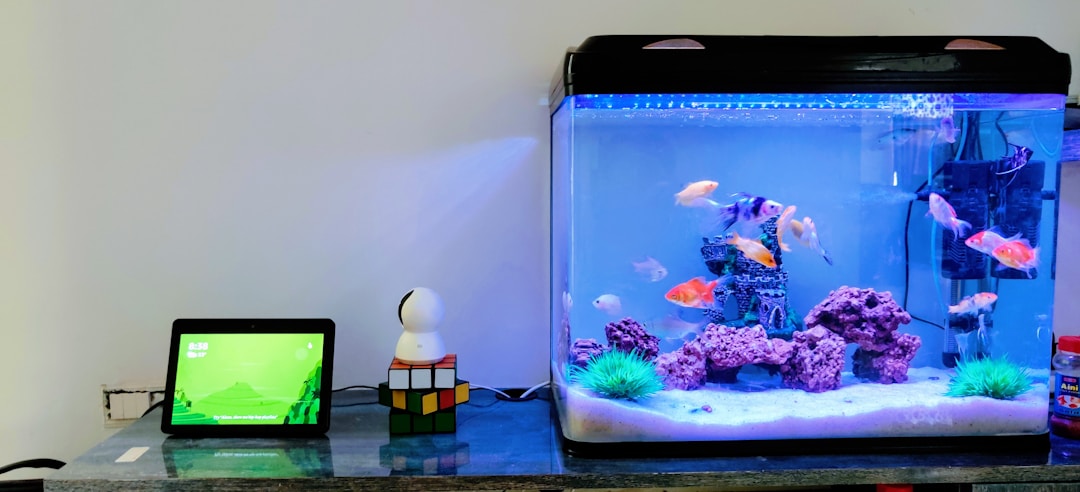
The Four Essentials
Every beginner tank needs exactly four core items:
- A properly sized filter
- A heater (for tropical fish)
- Adequate lighting
- Water testing supplies
Everything else is optional for a first setup.
Filter Selection: Sizing and Types
Filter Sizing Rule
Package deals often include filters rated for half your actual tank volume. This is the most common cause of cloudy water and fish deaths.
Minimum requirement: Filter should process 4-6x tank volume per hour.
For a 20-gallon tank:
- Minimum: 80 gallons per hour (GPH)
- Better: 100-120 GPH
- Check the actual rating, not the “up to X gallons” marketing claim
Filter Types Compared
| Type | Best For | Flow Quality | Maintenance | Price Range |
|---|---|---|---|---|
| Hang-on-back (HOB) | Community tanks 10-50 gal | Good | Easy, weekly | $20-60 |
| Canister | Larger tanks 40+ gal | Excellent | Monthly | $80-200 |
| Sponge | Shrimp, fry, hospital tanks | Moderate biological | Rinse monthly | $10-30 |
| Internal power | Small tanks, nano setups | Moderate | Monthly | $15-40 |
Beginner recommendation: HOB filter for tanks under 40 gallons. Canister for larger setups.
What Makes a Good Filter
Look for:
- Adjustable flow rate
- Multiple media chambers (mechanical, biological, chemical)
- Easy access for cleaning
- Quiet operation
Avoid:
- Single-chamber filters with no customization
- Models with no replacement media available
- Filters louder than a quiet refrigerator
Heater: Wattage and Safety
Heater Wattage Rule
Baseline: 5 watts per gallon
For a 20-gallon tank in a 68-72°F room:
- 100-watt heater is sufficient
- Go up to 150 watts if the room is cooler
Heater Placement
- Place horizontally near the filter outlet for even heat distribution
- Keep away from substrate to avoid cracking
- Fully submerge the heater body (check water line markings)
Safety Features
Look for:
- Automatic shut-off when removed from water
- Temperature dial with clear markings
- Indicator light showing when heating
Avoid:
- Old-style glass heaters without safety shutoff
- Heaters with no visible temperature setting
Do You Need a Heater?
| Fish Type | Temperature Need | Heater Required? |
|---|---|---|
| Tropical (bettas, guppies, tetras) | 76-82°F | Yes, always |
| Subtropical (goldfish, white clouds) | 68-74°F | Optional, depends on room temp |
| Coldwater (native species) | 60-68°F | No, avoid heating |
Lighting: What Works vs What Causes Algae
Light Type
LED is now the standard choice:
- Energy efficient
- Controllable intensity
- Long lifespan
- Available in plant-friendly spectrums
Avoid old fluorescent tubes - they run hot, use more power, and offer limited spectrum control.
Light Duration
Maximum for beginners: 8-10 hours per day
Too much light causes algae problems:
- Green water (free-floating algae)
- Hair algae on plants and glass
- Diatom brown coating on surfaces
Use a simple timer. Consistency matters more than exact duration.
Light Intensity
Start with lower intensity:
- “Low light” LEDs work for beginner plants (anubias, java fern)
- Increase intensity only if plants show pale color or slow growth
- High intensity without enough plants guarantees algae
What About Plant Growth Lights?
Specialized plant lights (high output, red/blue spectrum) are useful only if:
- You have fast-growing plants
- You fertilize regularly
- You accept more maintenance for algae control
For a beginner community tank with slow-growing plants, basic white LEDs work fine.
Water Testing: The Invisible Necessity
Test kits are the most skipped essential item. Beginners assume clear water means safe water. This assumption kills fish.
What to Test
| Parameter | Why It Matters | Safe Range |
|---|---|---|
| Ammonia | Toxic to fish, produced by waste | 0 ppm |
| Nitrite | Highly toxic, intermediate in cycle | 0 ppm |
| Nitrate | Less toxic, accumulates over time | Under 40 ppm |
| pH | Fish have preferred ranges | Species-dependent |
Test Kit Types
| Type | Accuracy | Cost | Ease of Use |
|---|---|---|---|
| Liquid kits (API, etc.) | High | $25-40 | Moderate |
| Test strips | Lower | $10-20 | Very easy |
| Digital meters | Variable | $30-100+ | Requires calibration |
Recommendation: Liquid kit for ammonia/nitrite/nitrate. Strips for quick pH checks are acceptable.
When to Test
- Daily during the first 4 weeks (cycling phase)
- Weekly for the first 6 months
- Monthly once the tank is established and stable
- Immediately if fish show unusual behavior
Equipment Beginners Often Buy But Should Not
First-Tank Purchases to Skip
| Item | Why Skip It | When It Might Be Useful |
|---|---|---|
| UV sterilizer | Treats symptoms, not causes; expensive for beginners | After water quality is stable, for specific disease prevention |
| Protein skimmer | Marine tanks only, useless for freshwater | Marine setups with high bioload |
| Air pump + decoration | Rarely necessary except high stocking | Very high fish density, specific display needs |
| Chemical additives “for clear water” | Band-aid solutions that ignore root cause | Never for beginners |
| ”Bacteria booster” products | Marginal benefit, cycling takes time anyway | After medicating or deep cleaning |
| Automatic feeder | Often overfeeds, causes water quality issues | Experienced keepers on vacation |
| Fancy substrate colors | Aesthetic only, sometimes affects water chemistry | After learning basics |
The “All-in-One Kit” Problem
Complete tank kits typically include:
- Undersized filter (rated for half the actual stocking capacity)
- Low-quality heater with no safety shutoff
- Basic hood light inadequate for plants
- Cheap test strips instead of real kits
You usually save money and get better equipment by buying individual quality components.
Common Equipment Purchase Mistakes
Mistake 1: Buying Based on Tank Size Marketing
“Suitable for tanks up to 20 gallons” often means:
- Works for 20 gallons with minimal stocking
- Inadequate for 20 gallons with normal community fish
- Completely insufficient for 20 gallons with goldfish
Check actual flow rates and wattage, not marketing claims.
Mistake 2: Prioritizing Decorations Over Equipment
Beginners often spend $50 on ornaments and $15 on the filter. Reverse this ratio.
Good equipment prevents fish deaths. Decorations do not.
Mistake 3: Skipping the Test Kit
“I’ll buy one later” usually means never. By the time you realize you need it, fish have already died from ammonia or nitrite spikes.
Mistake 4: Buying “Problem-Solvers” Instead of Preventing Problems
Cloudy water products, algae treatments, and disease medications are sold to people who skipped proper equipment and maintenance. The right equipment prevents most of these problems from happening.
Budget Breakdown: Realistic Starter Costs
For a 20-gallon freshwater community tank (quality equipment approach):
| Category | Item | Budget Range |
|---|---|---|
| Tank | Glass aquarium 20 gal | $30-60 |
| Stand | Dedicated stand or sturdy furniture | $40-80 |
| Filter | Quality HOB (100+ GPH) | $40-70 |
| Heater | 100-150W with safety shutoff | $25-40 |
| Light | LED fixture, basic | $30-50 |
| Test kit | Liquid ammonia/nitrite/nitrate | $25-35 |
| Substrate | Gravel, 20 lb bag | $15-25 |
| Décor | Minimal driftwood or rocks | $20-40 |
| Supplies | Net, siphon, thermometer | $20-30 |
| Total | $245-430 |
Compare to typical kit pricing at $80-150 with undersized equipment, then add $50-100 in replacements when components fail.
Equipment Upgrade Path
When to upgrade from beginner equipment:
| Item | Upgrade Trigger | Upgrade Option |
|---|---|---|
| Filter | Adding more fish, cloudy water persists | Canister filter with higher capacity |
| Heater | Temperature instability, room gets cold in winter | Higher wattage or second heater |
| Light | Adding plants, current light insufficient | Plant-specific LED with adjustable spectrum |
| Test kit | Established tank, want less frequent testing | Digital meter for pH, keep liquid for ammonia |
Upgrade only after the tank is stable and you understand why the upgrade helps.
Summary Checklist
Must have for first tank:
- Filter rated 4-6x tank volume per hour
- Heater appropriate for fish type and tank size
- LED light with timer (8-10 hours max)
- Liquid test kit for ammonia, nitrite, nitrate
Skip for first tank:
- UV sterilizer
- Air pump (unless high stocking)
- Chemical water clarifiers
- Automatic feeder
- Expensive decorations before equipment
Buy individually, not as kit:
- Quality filter from a known brand
- Heater with automatic shutoff
- Basic LED light
- Real test kit, not strips only
Focus on equipment that keeps fish alive. Everything else comes after water quality is stable.
Comments